

Today, we’re going to talk about a topic that’s somewhat dear to my heart: the best light therapy device for acne in 2026.
Best Device For Acne: Why You Need Blue Light
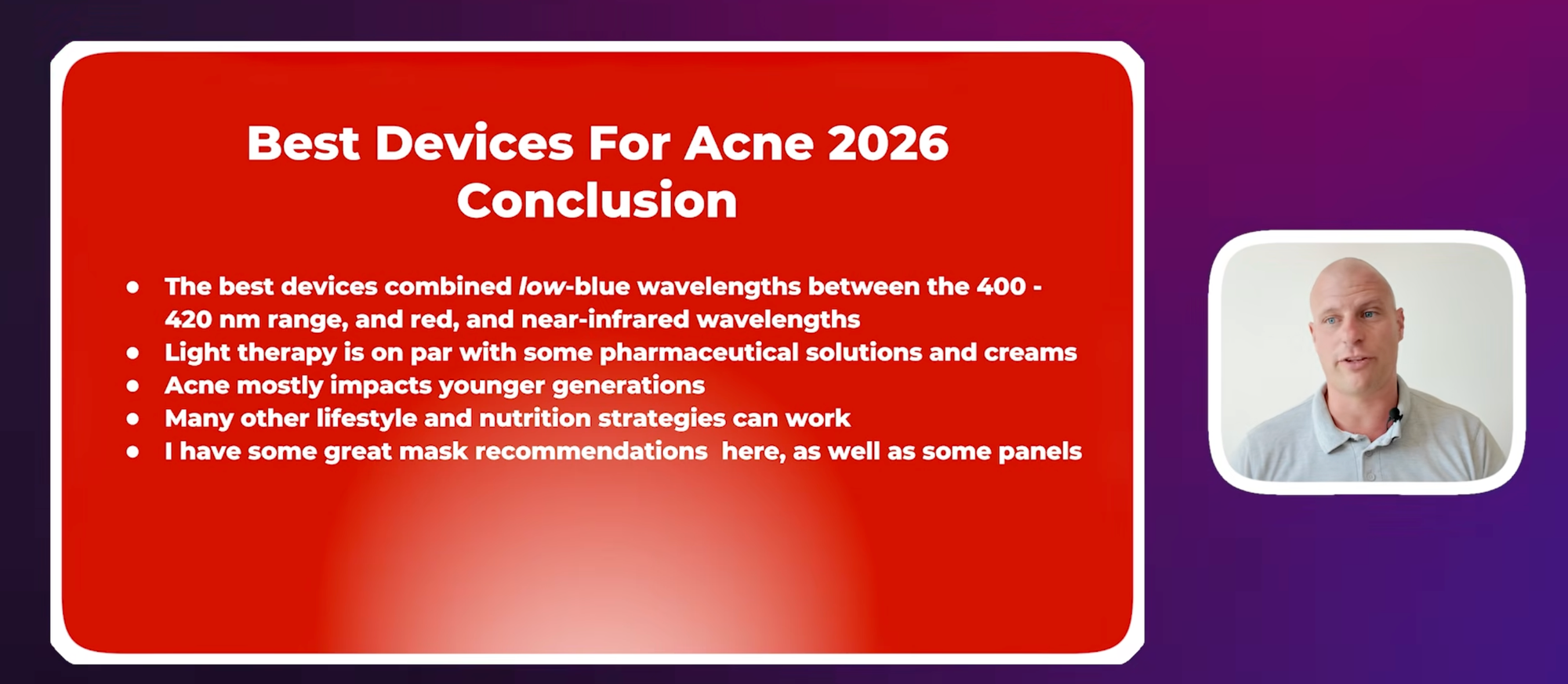
Let’s begin with the conclusion. The best devices for acne combine blue light — specifically in the 400 to 420 nanometer range — together with red and near-infrared light. Blue light spans roughly 400 to 500 nanometers, but the research consistently points to the lower end, around 407 to 420 nanometers, as the most relevant for acne. Not 450. Not 470. That distinction is critical.
The reason lies in the biology of acne. Cutibacterium acnes bacteria produce light-sensitive porphyrins that absorb strongly between 407 and 420 nanometers. When exposed to that wavelength range, a photochemical reaction destroys the bacteria. Red and near-infrared light play complementary roles, helping reduce inflammation, modulate skin cell activity, and promote tissue repair. For acne specifically, the combination of antibacterial blue light and anti-inflammatory red/near-infrared support appears most effective.
This topic is personal for me. I struggled with severe acne when I was younger and still have some residual scarring. I also noticed that my acne improved during summer and worsened during winter, particularly when living in Holland.
That pattern likely reflects differences in light exposure. In summer, we spend more time outdoors and receive broad-spectrum sunlight containing blue, red, and near-infrared wavelengths. In winter, especially in northern latitudes, light exposure drops dramatically. That seasonal fluctuation alone suggests light plays a meaningful role.
That said, acne is multifactorial. It involves hormones, genetics, inflammation, sebum buildup, microbiome changes, diet, sleep, stress, alcohol, smoking, blood sugar regulation, and even the gut-brain axis. Nutrients such as vitamin A, vitamin D, and zinc also matter.
Conventional treatment typically involves retinoids, topical antibiotics, or systemic antibiotics. These can work, but carry downsides. Light therapy is compelling because it often performs comparably to traditional treatments while causing fewer systemic side effects.
Currently, there are around 50 published studies on light therapy for acne vulgaris. Most blue light studies use wavelengths between 400 and 420 nanometers. Red light studies typically fall between 600 and 680 nanometers, with near-infrared used less frequently. UV light has only one formal study, though anecdotal experience suggests a possible benefit.
Dosing
Dosing varies widely. Some studies use very high doses — 48 joules per square centimeter for blue light and up to 87 joules per square centimeter for near-infrared. However, the average dose is closer to 10-20 joules per square centimeter, which is my conservative starting recommendation. Out of roughly 50 studies, 42 report positive outcomes, while only eight are neutral or negative. That overall signal is encouraging, though treatment protocols vary dramatically across studies, making universal recommendations difficult.
Now let’s go through three key reviews.
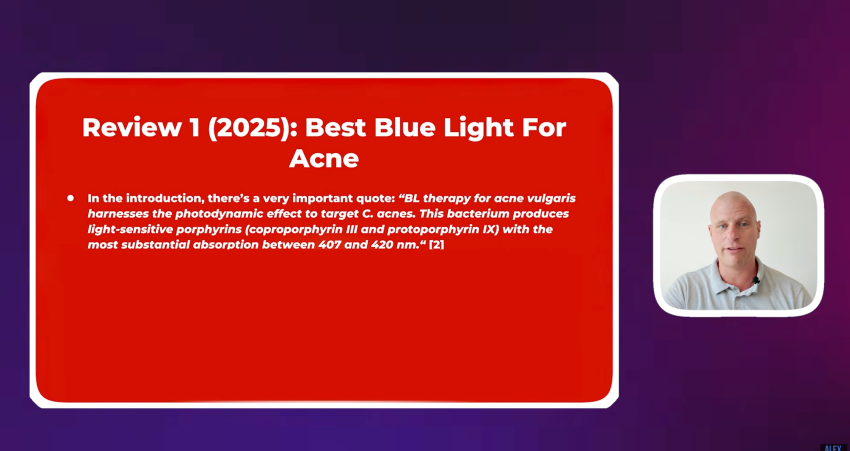
The first review, published in 2025, focused specifically on blue light therapy for acne vulgaris. The authors explain that blue light harnesses photochemical effects to target C. acnes, which produces porphyrins with substantial absorption at 407-420 nanometers. That absorption range explains why lower-wavelength blue light is preferred over 450 or 470 nanometers.
The review concludes that laser and LED-based light therapies can be highly effective, both as standalone treatments and in combination with conventional therapies. However, many of the included studies had short follow-up periods, often only a few weeks. The authors note that longer-term research is needed for stronger clinical comparisons.
The second review analyzed 13 earlier studies and focused on red and near-infrared light therapy. Its overall conclusion was more neutral. The researchers found that light therapy and conventional treatments worked about equally well, but light therapy did not clearly outperform standard medications or creams.
Importantly, this review reported no adverse effects associated with red light therapy. However, it also highlighted major variability in study design. Doses ranged from 12 to 72 joules per square centimeter. Treatment duration varied from two weeks to twelve weeks. Intervals differed, skin types varied, and sometimes dosage was not even clearly reported. Because of this inconsistency, the authors concluded that while red light therapy may serve as an adjunct or even substitute for antibiotics, better-designed studies are needed to establish definitive protocols.
The third review included eight blue light studies. Seven of those used wavelengths between 400 and 420 nanometers, while two used around 450 nanometers, and none used higher blue ranges. Again, dosing varied dramatically — from as low as 3 joules per square centimeter to extremely high values reported in some cases. Despite this inconsistency, higher-quality studies showed improvements ranging from 35 to 62 percent in acne lesions.
The authors concluded that blue light demonstrated clear improvements, particularly in inflammatory lesions and seborrhea, with minimal side effects. They also emphasized that more standardized treatment parameters are needed, as many studies failed to clearly describe application methods.
Taken together, these reviews suggest that blue light in the 400 to 420 nanometer range is particularly important for antibacterial effects, while red and near-infrared light support reductions in inflammation and tissue repair. Light therapy appears comparable to conventional treatments in many cases and may serve as a safe alternative or adjunct.
Acne Devices in 2026.
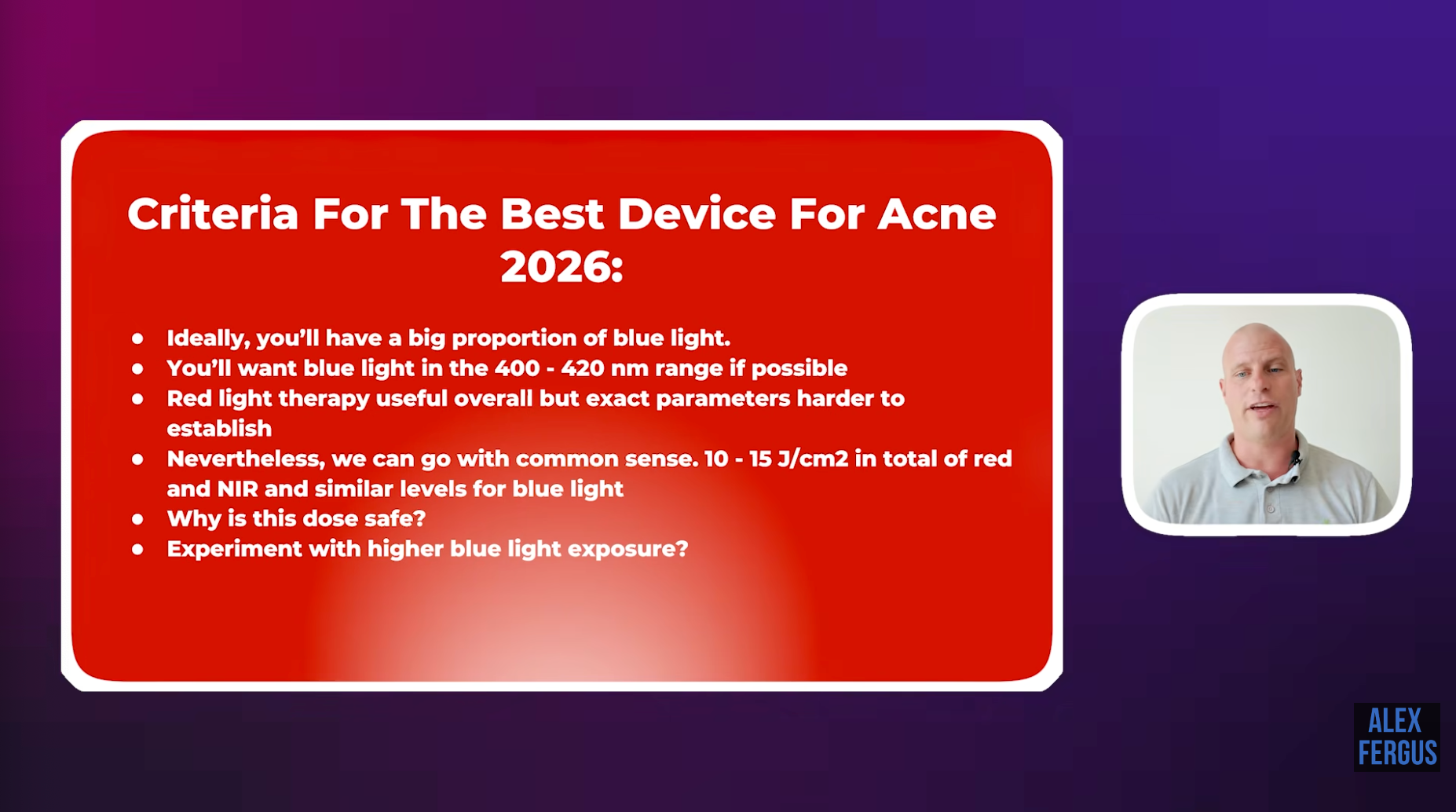
So what should we look for in a device? Ideally, it should contain a substantial proportion of blue light LEDs, not just a few scattered diodes. Coverage should span the entire affected area, typically the face. The blue light should peak within the 400 to 420 nanometer range. Red light in the 600-680 nanometer range and near-infrared wavelengths should also be included. A dose of roughly 10 to 15 joules per square centimeter for red light is a reasonable starting point, while blue light may be slightly higher if needed. These are conservative guidelines compared to natural sunlight exposure.
For specific acne devices in 2026, Alex has conducted extensive spectrometer testing across multiple masks. While several masks receive high overall ratings, one stands out specifically for acne treatment: the Rojo Dorada mask. The key reason is its blue light peak around 415 nanometers, which sits squarely within the ideal antibacterial absorption range. Many other masks include blue light, but their peak is closer to 450 nanometers, which does not align as precisely with the bacterial absorption spectrum.
An alternative approach would be to use a high-quality red light therapy wall panel from brands such as PlatinumLED, Hooga, Rojo, or Block Blue Light, combined with a localized blue light device, such as the Hooga Blue LED. However, that device operates around 450 nanometers, which is less optimal than 415 nanometers. It also requires careful eye protection and more precise targeting to avoid shining high-intensity blue light into the eyes. While this setup can work, it is less convenient and less wavelength-specific than a properly configured mask.
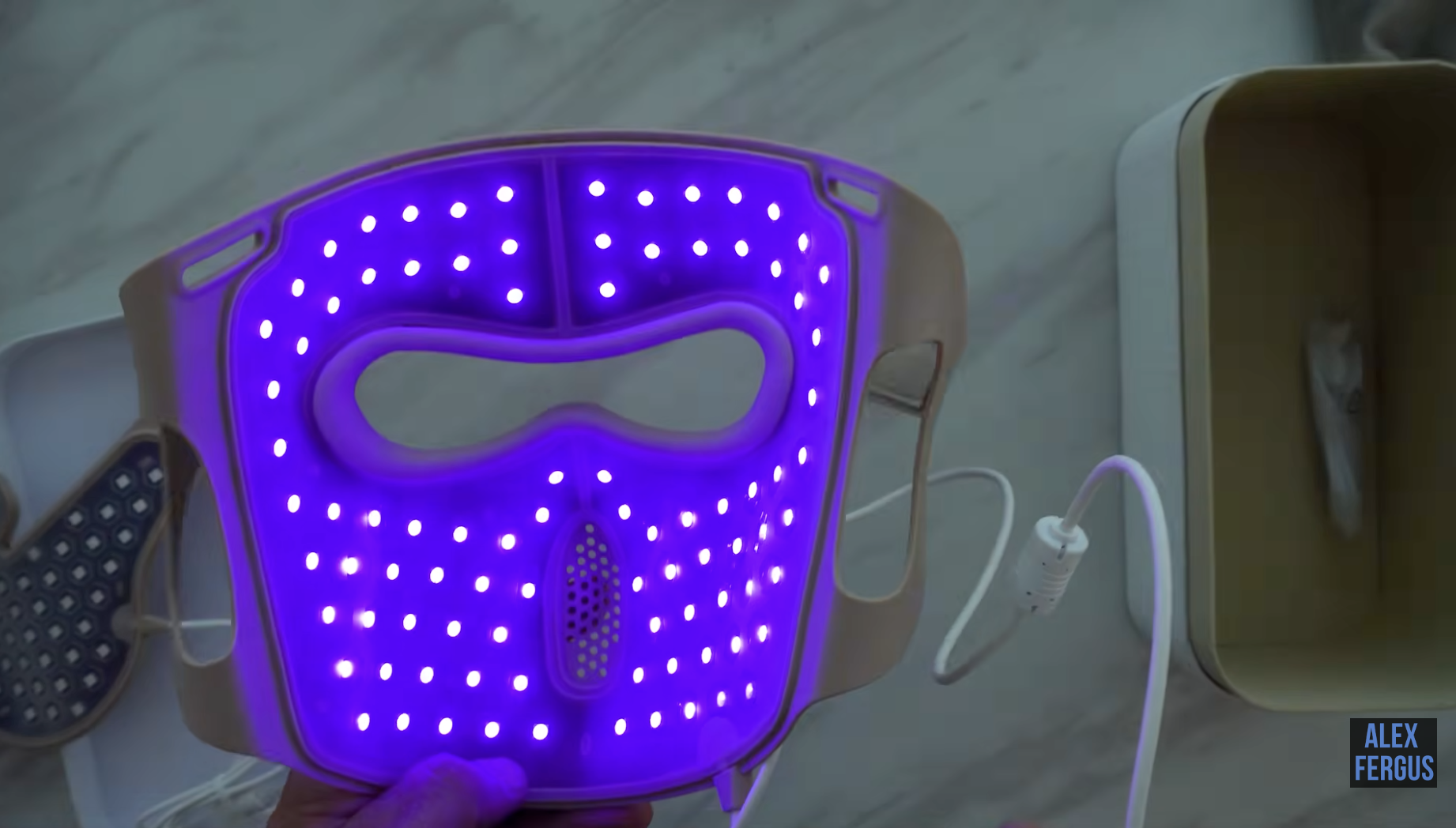
For these reasons, my top recommendation for acne in 2026 is the Rojo Dorada mask. Used according to the standard usage protocol, it provides appropriate blue, red, and near-infrared coverage in a single integrated system.
Methodology
Finally, a quick note on methodology. Most of the research referenced comes from compiled study databases and review analyses, including approximately 50 individual acne studies, with particular focus on review papers. I also examined selected individual studies and consulted broader medical databases for additional context.
As always, acne management should be comprehensive. Light therapy can be a powerful tool, but it works best when combined with proper diet, sleep, and stress management
Resources I mentioned
👉 Grab my free mask buyer’s checklist: https://aferg.co/mask-hot
⭐ Valdmir Heiskanen Excel sheet: aferg.co/lllt-studies
⭐ For Rojo Dorada Mask, use code ALEX and click here: https://aferg.co/rojo-rlt
⭐ For a Hooga Device, use the following link: https://aferg.co/hooga-rlt, for 10% OFF
⭐ For a Block Blue Device, use https://aferg.co/BlockBlueLight for 15% off sitewide
⭐ For a PlatinumLED product, use https://aferg.co/redled for 5% off BioMax panels
⭐ Blue Light Therapy: Everything You Need To Know:
⭐ Red Light Therapy For Skin: Beauty Benefits, Potential Complications, And More
Have You Seen These Reviews
🔴 Rouge G4 Pro Review: Most Advanced Red Light Panel Yet?
🔴 Best Red Light Panel Yet? Block Blue Light Mega Review
🔴 ROJO Dorada Review: The Best Red Light Mask Yet?
🔴 Hooga Blue Light Therapy Review: Handheld Acne Buster?
Bart's Bio
This is a post by Bart Wolbers. Bart finished degrees in Physical Therapy (B), Philosophy (BA and MA), Philosophy of Science and Technology (MS - with distinction), and Clinical Health Science (MS), has had training in functional medicine, and is currently the head researcher at Lighttherapyinsiders.com
Frequently Asked Questions
What is red light therapy?
Red light therapy uses red and near-infrared wavelengths of light to support normal cellular energy and recovery. It’s often referred to as photobiomodulation (PBM). If you're comparing devices and brands, you can check the discounts page for current deals and recommendations.
How does red light therapy work?
Red and near-infrared light can be absorbed by mitochondria in cells, which may help support ATP production and normal cellular repair processes.
What wavelengths are used in red light therapy?
Most red light therapy devices use wavelengths roughly between 630 nm and 880 nm. Common wavelengths include 630 nm, 660 nm, 810 nm, 830 nm, and 850 nm.
What’s the best red light therapy panel?
The best red light therapy panel depends on coverage needs, power output, wavelengths, and budget. Before buying, it's smart to check the discounts page to compare brands and deals.
Red light panel vs mask: which should I choose?
Red light panels usually provide broader coverage and higher power output, while masks are designed primarily for facial skin treatments.
What does low EMF mean for red light therapy devices?
Low EMF refers to lower electromagnetic field emissions around a device. Some buyers prioritize this feature when comparing devices.
How long should a red light therapy session last?
Many users begin with sessions of around 5–10 minutes per treatment area and adjust based on device power and distance.
How often should you use red light therapy?
Common routines range from 3–5 sessions per week depending on the goal and device strength.
Is red light therapy safe?
Most consumer red light therapy devices are considered safe when used according to manufacturer guidelines.
Who is Alex Fergus?
Alex Fergus is the founder of Light Therapy Insiders and reviews red light therapy devices with a focus on practical buying factors.
Where can I find red light therapy discount codes?
You can check the discounts page to see the latest red light therapy discount codes and deals.
Do red light therapy discount codes expire?
Yes. Most brands rotate discount codes during promotions and seasonal sales. If a code stops working, it's best to check the discounts page for the latest offers.


